

Post-Surgery & Injury Recovery
Recovery after surgery or injury taking longer than you'd like?
Recovering from surgery or a significant injury takes time, energy and patience — and many people find themselves wondering whether there is anything else they can do to support their recovery. Cocoon offers guided, at-home hyperbaric oxygen therapy (HBOT) that some people choose to explore as part of their wider recovery plan, alongside the guidance of their own medical team.
Talk to our team
Does this sound familiar?
When recovery feels like slow going
After surgery or a significant injury, the body has a lot to do — and recovery comes with its own challenges. If several of these feel familiar, you're not alone.
These are common parts of recovering from surgery or injury. If you're looking for ways to support the process, it may be worth exploring your options alongside your medical team.
Understanding recovery
Why recovery after surgery or injury takes time
After surgery or injury, the body works through a series of natural stages — managing inflammation, rebuilding tissue and gradually restoring strength and movement. That process takes energy and time, and it looks different for everyone.
Things like the type of procedure or injury, your overall health, sleep and activity levels can all influence how recovery feels day to day, which is why a steady, well-supported routine — guided by your medical team — matters.
Who this is for
Common situations people ask us about
Every recovery journey is different. Whether you're recovering from surgery or a significant injury, any decisions about additional therapies should be discussed with your treating medical team.
About the therapy
Why some people explore HBOT during recovery
Hyperbaric oxygen therapy isn't a cure or a shortcut, and it doesn't replace the care of your surgeon or medical team. But some people choose to explore HBOT as one part of their wider recovery plan. Here's what it actually involves.
01
Oxygen under gentle pressure
During a session you breathe oxygen-enriched air while the chamber is gently pressurised, allowing more oxygen than usual to dissolve into your bloodstream.
02
Dissolved oxygen circulates through the body
That dissolved oxygen circulates in the blood throughout the time you spend in the chamber, reaching tissues around the body.
03
Part of a wider recovery
People generally use HBOT as one part of a broader routine — alongside rest, rehabilitation and the advice of their own health professionals.
Whether HBOT is a sensible fit depends entirely on your situation, and it isn't right for everyone. We'd always encourage you to check with your surgeon or medical team first, and our team will talk it through with you honestly before you decide anything.
The Cocoon difference
Why at-home HBOT is different
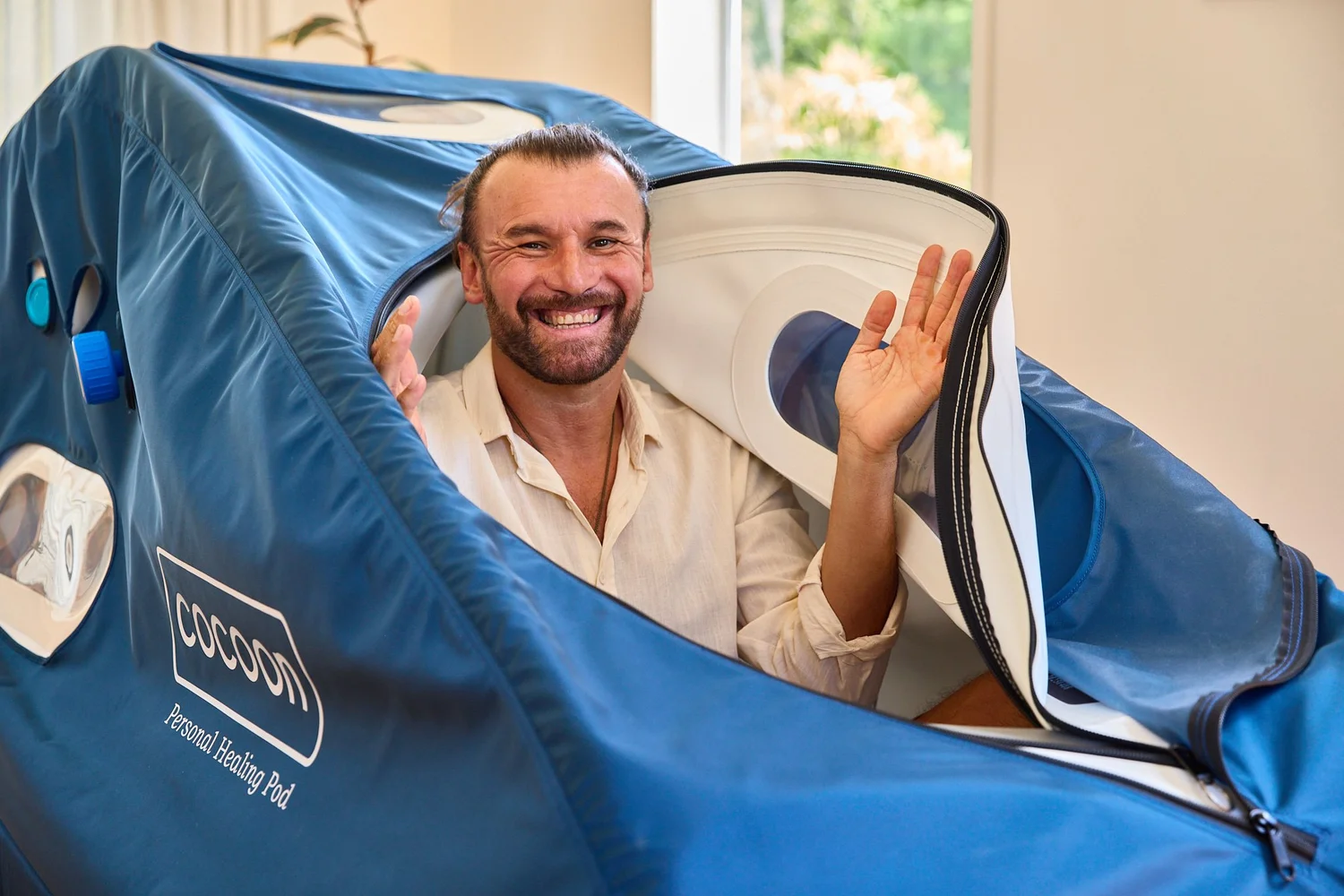
Most hyperbaric therapy means travelling to a clinic for short, scheduled appointments. Cocoon brings the chamber to you — which changes how easily it fits into your life.
Traditional clinic-based HBOT
- Travelling to and from each appointment
- Fixed, limited session times
- Fitting around the clinic's availability
- Waiting rooms and parking
At home with Cocoon
- Your chamber is installed in your own home
- Unlimited sessions across your programme
- Use it at the times that suit your day
- No travel, no waiting rooms
Consistency is often one of the biggest challenges in any recovery programme. Having your chamber available at home can make it easier to build therapy into everyday life.
Meet your guide
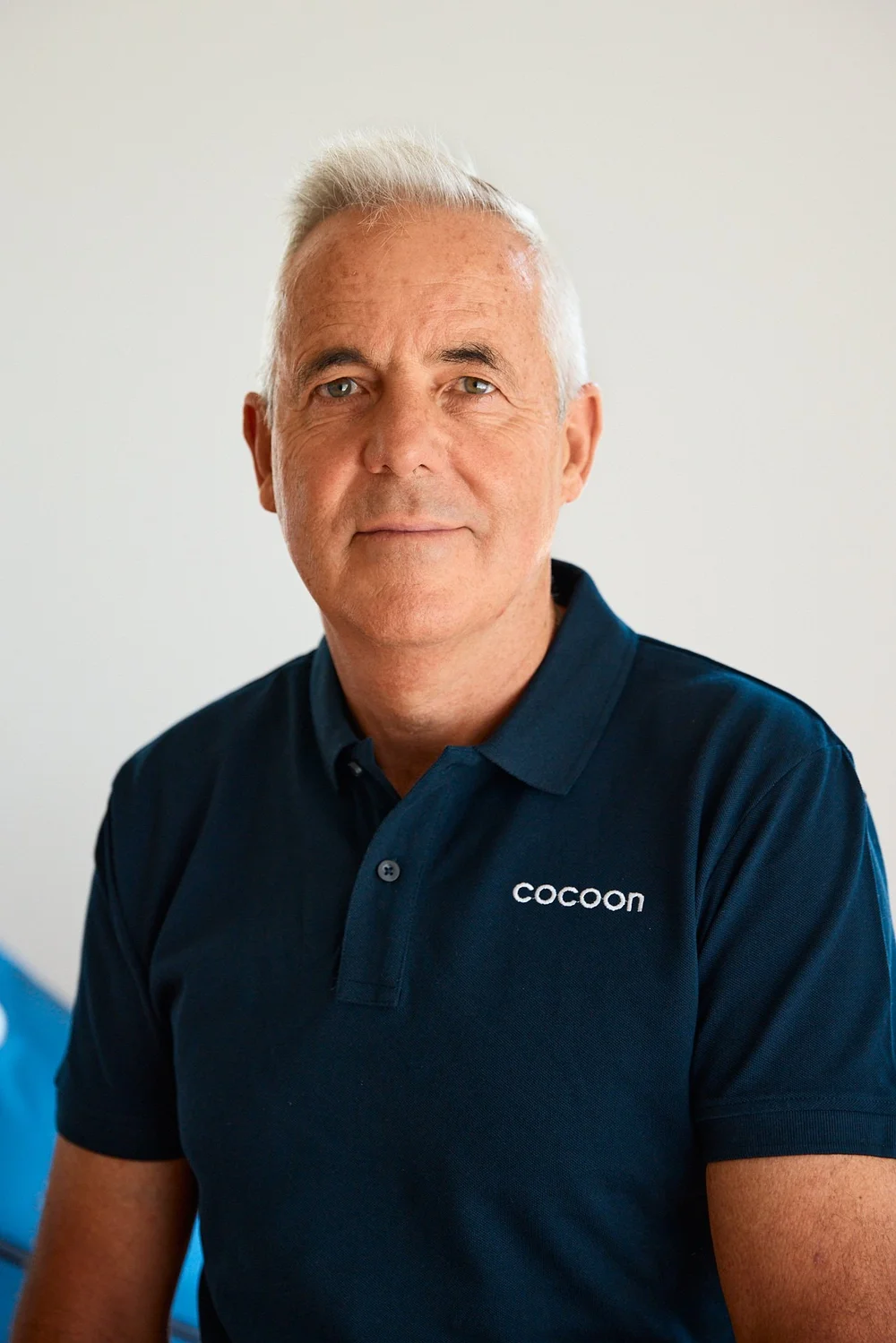
Guidance from Dr Gary Dennis
DC (USA) · MMC (AUS) · Dip HBOT (USA) · NZCA
Dr Gary Dennis has spent much of his career supporting people with complex and chronic health challenges, with a special interest in neurological recovery and dysautonomia. His own experience recovering from a serious brain injury led him to explore hyperbaric oxygen therapy and the role that consistent access can play within a broader recovery programme.
Every Cocoon programme begins with a personal conversation with Gary to understand your situation, answer your questions and determine whether at-home HBOT may be appropriate for your goals. From installation through to ongoing support, you'll have direct access to guidance throughout your programme.
How it works
Your Cocoon programme
Recovery takes time, and everyone's path is different. Here's how a Cocoon programme works — from the first conversation through to ongoing support.
Consultation
We start with a conversation about your symptoms, history and goals, to understand whether HBOT is a sensible fit for you.
Personalised HBOT programme
If it's appropriate, we map out a programme — session length, frequency, and how it fits around your routine.
At-home therapy
Your chamber is installed in your home, giving you convenient access to HBOT without travelling to appointments or fitting sessions around clinic schedules.
Ongoing support
We stay in touch throughout your programme, checking in and adjusting your plan as you go.
What you can count on
Why people recovering from surgery or injury choose Cocoon
Guided by Dr Gary Dennis
Every programme is personally guided from your first conversation through to ongoing support.
Consistent access at home
Daily access makes it easier to stay consistent with your programme and fit sessions around your life.
Delivery & setup included
Your chamber is delivered, installed and explained by our team so you can get started with confidence.
Ongoing support
Regular check-ins throughout your programme mean you're never left to navigate the process alone.
Common questions
Recovery, HBOT & what to expect, answered
How long does recovery after surgery or injury usually take?
When should I start thinking about recovery support options?
Why does recovery often feel so tiring?
What can help support recovery after surgery or injury?
Does HBOT speed up healing?
Can I use HBOT after surgery?
Is HBOT safe after surgery or injury?
What does a typical HBOT programme at Cocoon involve?
Is it covered by ACC or insurance?
Talk to us
Find out whether HBOT could support your recovery
Have a conversation with our team about your situation, and we'll help you work out whether an at-home HBOT programme is a sensible fit. No pressure, no obligation.
Talk to our teamCall 022 067 2277 · info@cocoon.net.nz

“I used the Cocoon mHBOT after hip surgery and, while the early effects were subtle and inflammation ticked up briefly in week one, it settled within 1–2 weeks and over 2–3 months I recovered faster - an alternate-day 90-minute routine eased tendon pain, supported wound healing, and seemed to strengthen deep scarring, with no side effects. I’m continuing long-term because it feels safe and genuinely helpful, and I highly recommend Gary -knowledgeable, reassuring, and excellent service.”
— Mr. Bill Farrington, Consultant Orthopaedic Surgeon, Auckland